Why One Flight Leaves You Thirstier Than a Whole Day Outside
Quick Answer: Cabin air at cruising altitude typically runs at 10 to 20 percent relative humidity, drier than most deserts, because the outside air being pressurized contains almost no moisture. You lose water continuously through your breath and skin without ever feeling sweaty, and the standard drink-cart service replaces only a fraction of it. The fix is boring and effective: arrive hydrated, carry a large bottle through security, drink roughly a cup an hour in the air, go easy on alcohol, and add a little sodium on long-haul days.
The headache when you land is not mysterious. It is a water bill.
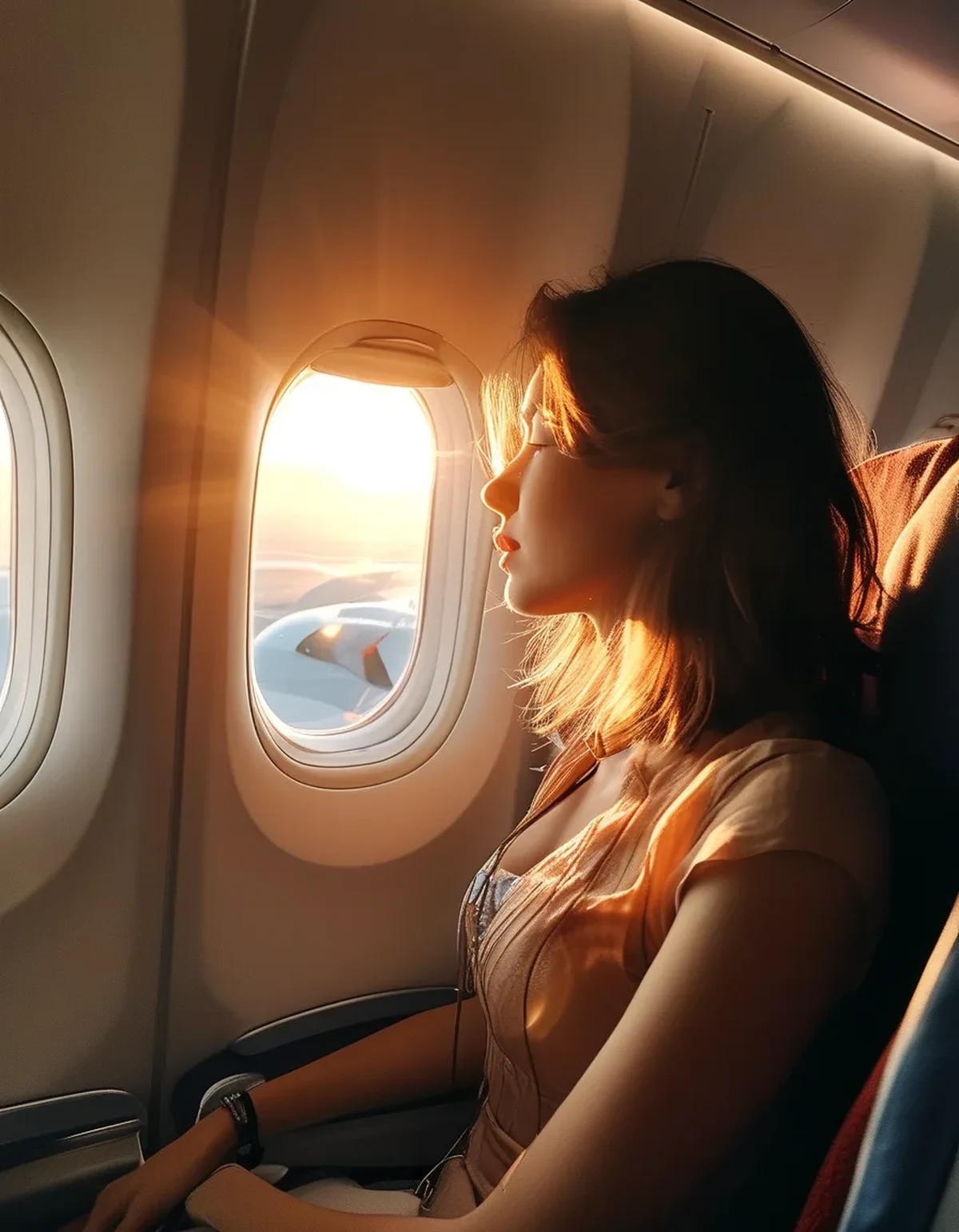
Why is airplane air so much drier than anywhere on the ground?
Because the moisture never gets on board in the first place.
Cruise altitude air is extremely cold, and cold air holds almost no water. The cabin is pressurized with outside air drawn through the engines, and when that bone-dry air is warmed to a comfortable temperature, its relative humidity collapses to somewhere between 10 and 20 percent — lower than a typical desert afternoon and far below the 40 to 60 percent your body is used to indoors.
Most of the humidity that does exist in a cabin comes from the passengers themselves, which is why a packed flight is slightly less dry than an empty one. Nobody is adding moisture on purpose; adding humidity risks condensation and corrosion inside the airframe, so airlines keep it dry by design.
What that does to you over a few hours:
You lose water through every breath. Air comes in dry, leaves your lungs saturated, and that moisture is gone. Over a long-haul flight this alone adds up to a meaningful amount.
Your skin loses water invisibly. There is no sweat to see, so nothing prompts you to drink. This is the core problem — flight dehydration has no obvious signal until it is already done.
Your eyes, nose, and throat dry out first, which is why contact lenses start to grate at hour three and why so many people land with a scratchy throat.
The cabin altitude adds a little on top. Cabins are pressurized to the equivalent of roughly 6,000 to 8,000 feet, which nudges your breathing rate up slightly and increases the loss through your lungs.
By the time you land from a long flight, the combined losses can reach one to two liters — the equivalent of a hard workout you never felt yourself doing.
How much should you actually drink before and during a flight?
More than the cart offers, on a schedule rather than on thirst.
Start the day before on long-haul trips. Arriving at the airport already a little dry means you spend the whole flight in deficit. Normal, steady drinking through the previous day beats chugging at the gate.
Buy or fill a large bottle after security. This is the single highest-value move, because it removes the dependency on drink service entirely. The cart comes twice on many flights and pours about 150 milliliters into a cup of ice — a fraction of what you are losing.
Aim for roughly a cup, around 250 milliliters, per hour in the air. You do not need to be precise. A one-liter bottle emptied over a four-hour flight, plus whatever the cart brings, keeps most people comfortably even.
Add a little sodium on long-haul days. Plain water alone passes through quickly when you are sitting still. An electrolyte tablet in the bottle, or simply eating the salty snacks you would normally skip, helps you actually retain what you drink. This is also a day when tomato juice earns its odd cruising-altitude popularity.
Go easy on alcohol and treat coffee as neutral. A glass of wine on a long flight is not a catastrophe, but alcohol adds fluid loss, disrupts the little sleep you might get, and its effects feel stronger at cabin altitude. The classic land-feeling-wrecked combination is two drinks, a coffee, and no water.
Time your drinking to the aisle, not the seatbelt sign. Drink more when movement is easy — after boarding, with meals, when your seatmate is already up — so the bathroom trip is convenient rather than a negotiation.
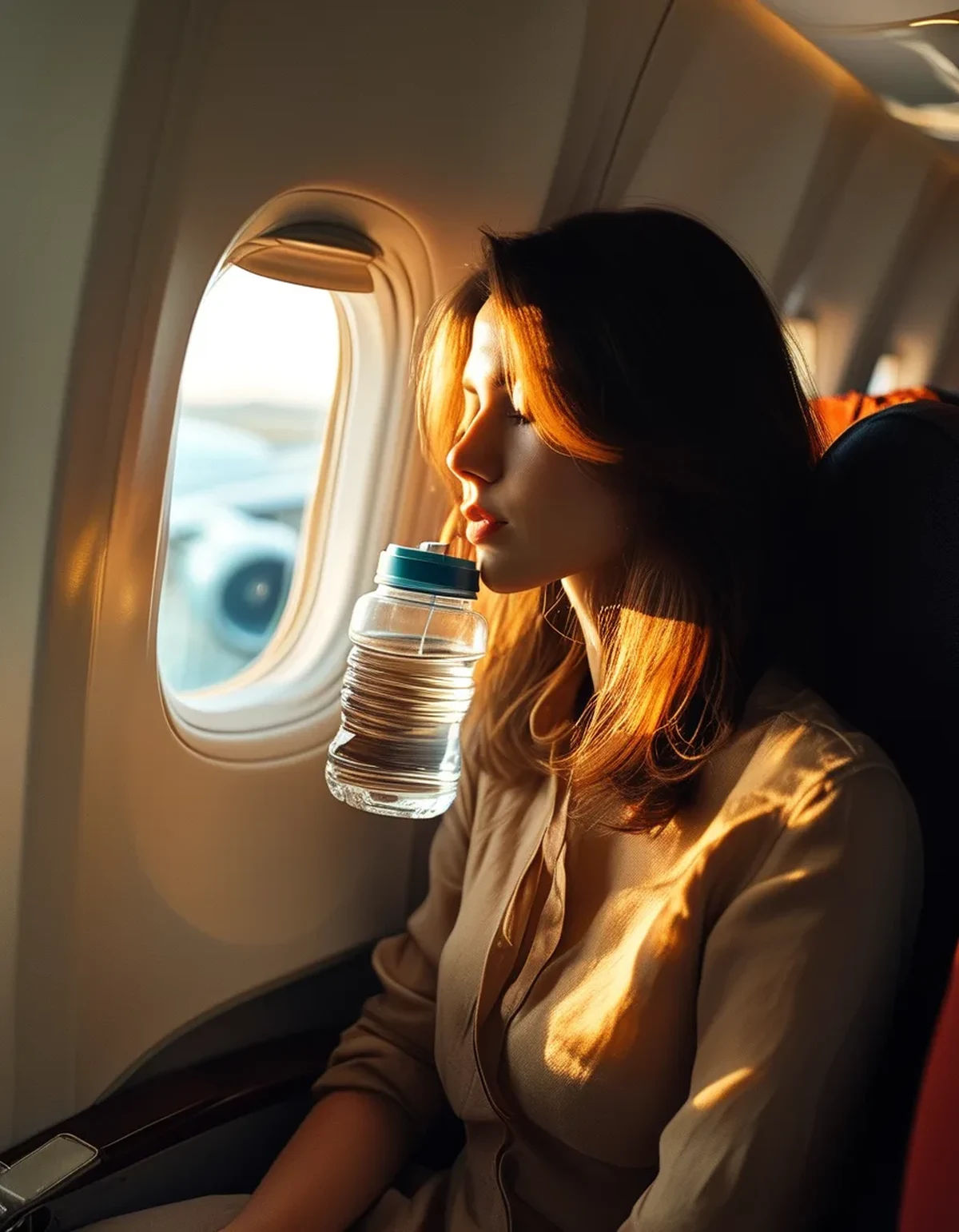
Why do people deliberately under-drink on planes, and what fixes it?
The window seat problem. Almost everyone does this and almost nobody admits it.
The main reason travelers avoid water on flights is not ignorance — it is the bathroom. Climbing over two strangers feels socially expensive, so people quietly ration themselves for hours. The result is arriving dehydrated on purpose.
What actually helps:
Choose the aisle when hydration matters more than the view, especially on flights over four hours. Frequent flyers converge on this for a reason.
In a window seat, sync with your row. Get up whenever the aisle passenger does, whether or not you feel urgent. One easy trip beats two awkward ones.
Front-load the flight. Drink most of your bottle in the first two-thirds of the flight, then taper, so the last hour and descent are calm.
Move when you get up anyway. Standing, a slow walk to the back, calf raises while you wait — circulation and comfort both improve, and on long flights regular movement is a sensible habit for its own sake. If you fly in travel leggings with light compression socks, the sitting hours are noticeably kinder on your lower legs.
Do not fix the bathroom problem with dehydration. Landing with a headache, heavy legs, and a rough first evening at the destination is a bad trade for avoiding two excuse-mes.
Rehydrate deliberately after landing. A big glass of water plus a salty meal on arrival repairs most of the deficit quickly. If your first stop is a hotel gym or a walk to shake off the flight, drink first — the same yoga pants that got you through the flight will happily do the airport-to-evening shift, but only if you refuel the machine inside them.
What Nobody Tells You About Cabin Air
The air is very clean and very dry at the same time. Modern cabins run HEPA filtration with frequent full air exchanges, so the stale-air reputation is outdated. Dryness, not dirtiness, is the real cost of breathing it for hours.
Your landing headache is usually two things stacked. Mild dehydration plus caffeine timing — the coffee you had at the gate wearing off mid-flight — produces the classic descent headache. Water plus a modest coffee on arrival fixes what feels like something worse.
Contact lens wearers suffer on a schedule. Lenses dry along with the air, and hour three is the usual complaint point. Glasses on the plane, lenses at the destination is the veteran move, with rewetting drops as the fallback.
Dry nasal passages matter more than comfort. The mucous membranes in your nose are part of your first-line defense, and they work worse when dried out. A small saline spray used a couple of times on a long flight is the cheapest upgrade in travel.
Your skin is not being damaged, just borrowed from. The tight, dull feeling after a long flight is surface water loss. Moisturizer helps the feeling; the real repair is the water you drink on arrival day.
Kids and older travelers drift further. Thirst signaling is weaker at both ends of the age range, so the drink-by-schedule rule matters most for the people least likely to ask.
FAQ: Flight Hydration Questions, Answered
How much water should I drink per hour of flying?
About a cup, or 250 milliliters, per hour in the air is a comfortable target for most adults. On a long-haul flight that means emptying a large bottle or two across the journey, not surviving on cart pours.
Do electrolyte tablets actually help on flights?
On long-haul days, yes, modestly. Sitting still while drinking plain water sends a lot of it straight through; a little sodium improves retention. On short domestic hops, plain water is fine.
Does coffee or tea count toward my fluid intake?
Mostly yes. Normal amounts of caffeine are only mildly diuretic, and the fluid still counts. The problem pairing is caffeine plus alcohol plus no water, not the coffee itself.
Why are my eyes so dry when I land?
Cabin humidity of 10 to 20 percent evaporates your tear film faster than it can rebuild, and screens make it worse because you blink less. Rewetting drops, an occasional long blink break, and glasses instead of contacts solve most of it.
TL;DR:
- Cabin air runs at 10 to 20 percent humidity, so you lose one to two liters on a long flight through breath and skin without noticing.
- Carry a large bottle through security and drink about a cup an hour; the drink cart alone cannot keep up.
- Alcohol, gate coffee, and window-seat rationing are the three habits that turn dryness into a landing headache.
- Add a little sodium on long-haul days, and rehydrate deliberately with a salty meal on arrival.
Buy the big bottle after security today. It is the cheapest upgrade your arrival evening will ever get.
See It in Motion
Seen here: High Waist Yoga Leggings with Inner Pocket — shop it on bubblelime.com
Keep Reading
This article is for general informational and styling purposes only. Fit, sizing, and product availability may vary.