Why Your Workout Clothes Get Way More Static-Clingy on a Plane Than at Home
Quick Answer: Airplane cabin air is kept deliberately dry — often below 20% humidity, far lower than most homes — and low humidity is the single biggest driver of static buildup in synthetic activewear fabrics, so the same leggings that never cling on your living room floor will cling noticeably after even a short flight.
You didn’t do anything differently. Same leggings, same routine — except this time you’re standing in an airport bathroom picking fabric off your calves because the static is bad enough to be genuinely annoying.

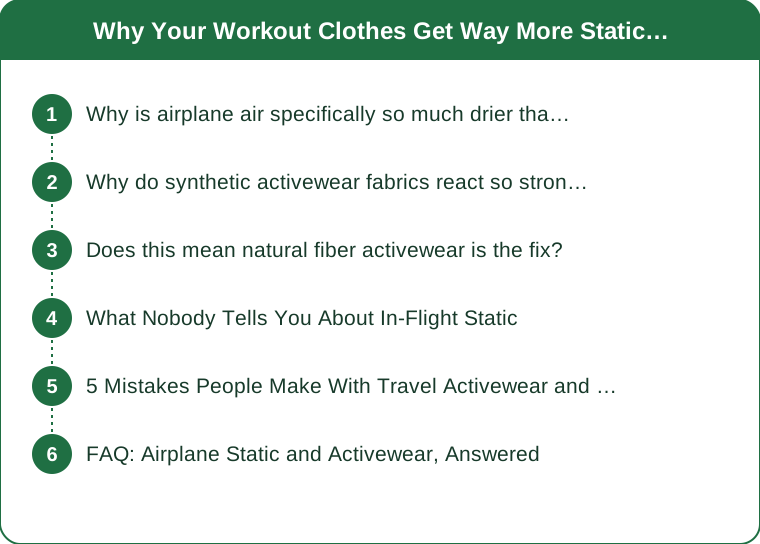
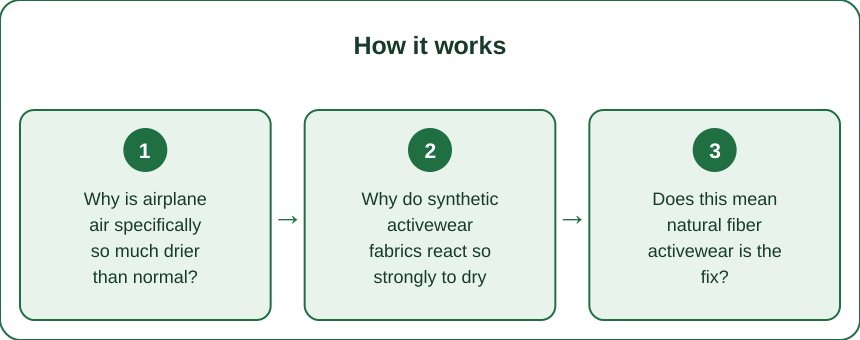
Why is airplane air specifically so much drier than normal?
Cabin air at cruising altitude is drawn from outside the aircraft, where humidity at that altitude is naturally near zero, then mixed with recirculated cabin air. Airlines don’t add much moisture back in for weight and cost reasons, so cabin humidity commonly sits between 10-20%, compared to a typical home’s 30-50%. That gap alone explains most of the difference you’re feeling.
Why do synthetic activewear fabrics react so strongly to dry air?
Static cling happens when two fabric surfaces rub together and exchange electrons, building up a charge that isn’t dissipated. Humid air is naturally conductive enough to let that charge drain away quickly; dry air isn’t, so the charge builds and stays. Synthetic fibers like polyester and nylon (common in leggings and travel activewear) hold static more readily than natural fibers like cotton, which compounds the dry-air effect.
Does this mean natural fiber activewear is the fix?
It would reduce static, but natural fibers usually give up moisture-wicking and stretch performance that’s the whole point of activewear in the first place. A better trade-off is a fabric softener sheet or anti-static spray applied before your flight, which coats fibers with a thin conductive layer without changing the garment itself.

What Nobody Tells You About In-Flight Static
The friction that builds static isn’t just from your clothes touching each other — it’s also from sitting on a synthetic airplane seat cover for hours, plus dry recycled cabin air moving past you from overhead vents. Even switching seat position periodically reduces the sustained friction that builds the strongest charge, which is part of why static seems to spike specifically toward the end of a longer flight.
5 Mistakes People Make With Travel Activewear and Static
1. Packing leggings straight from the dryer with no anti-static treatment. Dryer static often carries over into a flight’s dry air.
2. Layering two synthetic pieces directly against each other. More synthetic-on-synthetic contact means more charge buildup.
3. Ignoring lotion on legs before a flight. A light layer of lotion adds moisture to skin, which reduces cling at the point of contact.
4. Assuming static means the fabric is low quality. It’s almost entirely about humidity, not garment quality.
5. Not carrying a travel-size anti-static spray. A small bottle in a carry-on solves this in seconds if it happens mid-trip.
FAQ: Airplane Static and Activewear, Answered
Does drinking more water on a flight help with static?
Only indirectly — staying hydrated supports your skin’s moisture level slightly, but cabin air humidity is the dominant factor and water intake alone won’t offset it.
Is static cling worse on longer flights?
Generally yes, since more time in dry cabin air and more sustained seat friction both compound the effect the longer you’re airborne.
Can a dryer sheet in your bag work as a quick fix mid-trip?
Yes — lightly rubbing a dryer sheet over the outside of clingy fabric adds the same anti-static coating a pre-treatment would, just applied later.
TL;DR:
- Cabin air commonly sits at 10-20% humidity versus a home’s 30-50%, and dry air is the main driver of static
- Synthetic activewear fibers hold static more readily than natural fibers, compounding the effect
- Anti-static spray or a dryer sheet before or during a flight is a fast, effective fix
- Seat friction and flight length both add to how noticeable the static becomes
It’s not your leggings failing you — it’s the driest air you’ll be in all week, and a two-dollar spray solves it.
See It in Motion
Seen here: Super High Waist Embossed Yoga Leggings with Inner Pocket — shop it on bubblelime.com
Keep Reading
This article is for general informational and styling purposes only. Fit, sizing, and product availability may vary.