Sweating Off the Time Zone: Exercise as a Jet Lag Tool
Quick Answer: Exercise is a real circadian cue, and timing it to local time helps reset your body clock faster than light alone. On arrival, take a 30–45 minute outdoor walk in local morning or midday — it stacks light, movement and staying awake into one activity. Traveling east, exercise in the morning and skip evening workouts; traveling west, afternoon or evening activity helps extend your day.
Every jet lag guide says the same two things: get sunlight, consider melatonin.
Both are correct. Both leave out a lever you can pull that also happens to be the best sightseeing decision you’ll make all trip.
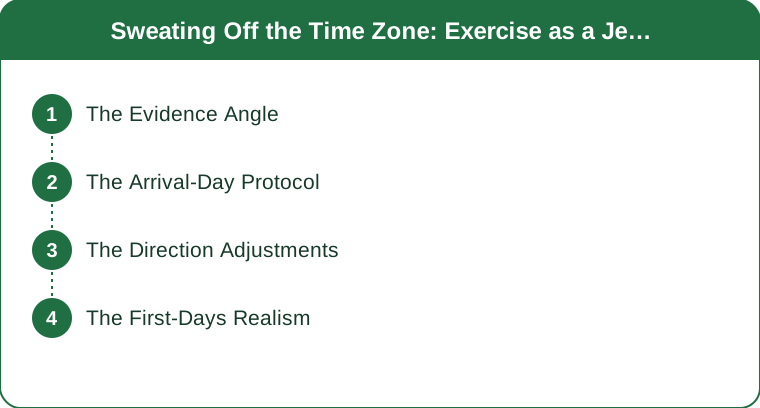
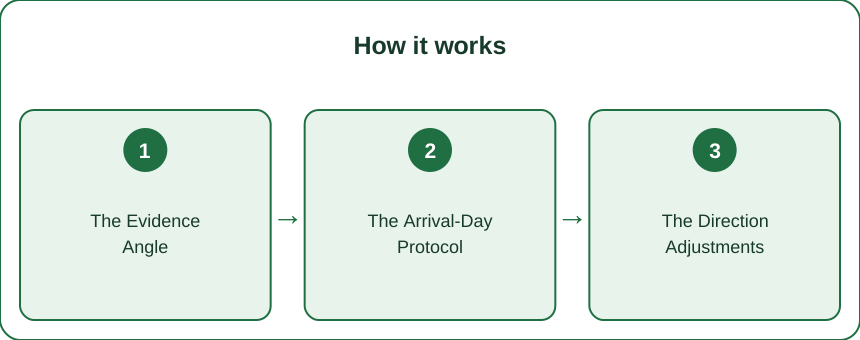
Movement shifts your body clock. And the arrival-day walk does three useful things at once.

Does exercise actually help with jet lag?
Yes — exercise functions as a zeitgeber, a time cue your circadian system reads, alongside light and meal timing. Studies on exercise timing have found measurable shifts in circadian phase depending on when in the day the activity happens.
Two honest caveats. Exercise won’t out-shift light — bright light remains the strongest cue available to you. And the size of the effect varies between people. But stacked with light exposure, movement compresses the adjustment period, and for most travelers that means arriving functional a day sooner.
That’s the whole case. It’s not magic; it’s an extra dial on a system that has three.
What should you do on arrival day?
One move covers almost everything: an outdoor walk at local morning or midday, 30–45 minutes.
It delivers light exposure, movement, and the enforced wakefulness that keeps you from napping — the trifecta in a single activity. It also puts you outside in a new city, which is presumably part of why you came.
The nap is the enemy here. A 20-minute nap is survivable; a two-hour afternoon collapse resets your adjustment to zero and leaves you awake at 3 a.m. The walk beats the nap, and it shows you the things the nap would have slept through.
If you land late at night, skip the walk and go to bed at local bedtime. The protocol starts the next morning.
How does travel direction change the timing?
Direction matters more than most people realize, because you’re either trying to advance your clock or delay it.
Eastward (the hard direction). You need to shift earlier. Get morning local exercise and morning light. Avoid evening workouts — evening exercise tends to push your clock later, which is the opposite of what you need.
Westward (the forgiving direction). You need to stay up later. Afternoon and early-evening activity helps extend your day and keeps you awake until local bedtime.
Once you know this, the timing of your gym session becomes a navigation instrument rather than a scheduling afterthought.

What should the first few days of training look like?
Adjust your expectations, not just your schedule.
Reduce intensity for the first two to three days. Your body is running internal renovations — sleep is fragmented, hydration is off, and coordination is slightly worse than usual. Zone 2 work beats intervals while your clock is mid-shift.
Double the hydration after flying. Cabin air is extremely dry, and dehydration reads a lot like jet lag: headache, fatigue, poor concentration.
Pick formats that fit travel. A hotel-room bodyweight routine, a long walking tour, or a hotel gym session. The best travel workout is the one that doesn’t require finding anything.
By around day three, most people find the clock and the training calendar re-sync — typically faster than the sedentary version of the same trip.
This is general wellness information, not medical advice. If you have a heart condition, a sleep disorder, or you’re managing medication timing across time zones, check with a clinician before changing your routine — and see a professional if sleep problems persist well beyond the trip.
Myth vs Fact: exercise and jet lag
Myth: A hard workout on arrival will tire you out and fix your sleep. Fact: High-intensity exercise close to bedtime tends to delay sleep onset, and your body is already under travel stress. Easy outdoor movement in daylight does far more for your clock than an exhausting session does.
Myth: Napping on arrival day is fine if you keep it short. Fact: A short nap of about 20 minutes is generally manageable. It’s the long afternoon sleep that undoes the day’s adjustment and pushes your body toward the departure time zone again.
Myth: Exercise can replace light exposure for resetting your clock. Fact: It can’t — light is the dominant cue. Exercise is an additional dial that works best stacked with light, which is exactly why the outdoor walk beats the hotel treadmill.
Frequently Asked Questions
When should I exercise to beat jet lag flying east?
Exercise in the local morning, ideally outdoors, and avoid evening sessions for the first few days. Eastward travel requires advancing your clock, and morning light plus morning movement both push in that direction while evening activity pushes back.
How long does it take to adjust to a new time zone?
A common rule of thumb is about one day per time zone crossed, with eastward travel taking longer than westward. Stacking morning light, well-timed movement and consistent local meal times tends to compress that meaningfully.
Should I work out right after a long flight?
Light movement, yes — a walk is ideal. Save hard training for day three or later. Immediately post-flight your body is dehydrated and your sleep is disrupted, which raises perceived effort and injury risk without giving you much back.
TL;DR:
- Exercise is a genuine circadian cue, though weaker than light — the two stack well together
- Arrival-day move: a 30–45 minute outdoor walk at local morning or midday, not a nap
- Flying east, exercise in the morning and skip evening sessions; flying west, use afternoon activity
- Keep intensity easy for two to three days and double your post-flight hydration
- Expect re-synced sleep and training by about day three, faster than doing nothing
Keep Reading
This article is for general informational and styling purposes only. Fit, sizing, and product availability may vary.