Why Hotel Blackout Curtains Make Jet Lag Last Longer
Quick Answer: Jet lag is a clock problem, not a sleep-debt problem, and the clock is set almost entirely by light hitting your eyes in the first hour or two after waking. Blackout curtains protect the sleep you get on night one but block the morning light signal that actually shifts your body clock onto local time. Sleep in the dark, then get bright light within thirty minutes of waking — ideally outdoors — and leave a gap in the curtain so the room brightens near your target wake time.
Dark rooms feel like the solution. For the first night they are.
We have covered jet lag exercise resets, timezone workout adjustment and why day three of a trip feels worse than day one. This is the piece of the puzzle that sits in the window.
Why does morning light matter more than sleep for jet lag?
Because the two are solving different problems, and only one of them moves your clock.
Sleep repays tiredness. Light moves the clock. You can sleep nine hours in a dark hotel room and wake up with your internal clock still firmly on the time zone you left.
The signal comes from specialised cells in the retina that respond mainly to bright, blue-rich light. They do not care whether you feel awake; they care how much light arrives and when.
Timing decides direction. Light in your subjective morning pulls the clock earlier; light in your subjective evening pushes it later. Same light, opposite effect, which is why random exposure sometimes makes things worse.
Indoor light is far weaker than it looks. A well-lit hotel room might be two to five hundred lux. An overcast morning outdoors is ten thousand or more. Your eyes adapt, so the difference is invisible and enormous.
The clock moves roughly an hour a day unaided. Deliberate light exposure can roughly double that, which is the difference between feeling normal on day three and on day six.
And a fully blacked-out room removes the strongest daily cue you have. You wake to the same darkness at seven as at three, and the body reads no information from it at all.
What blackout curtains get right, and where they cost you
They are not the enemy. They are a tool being used for the whole trip when they should be used for one night.
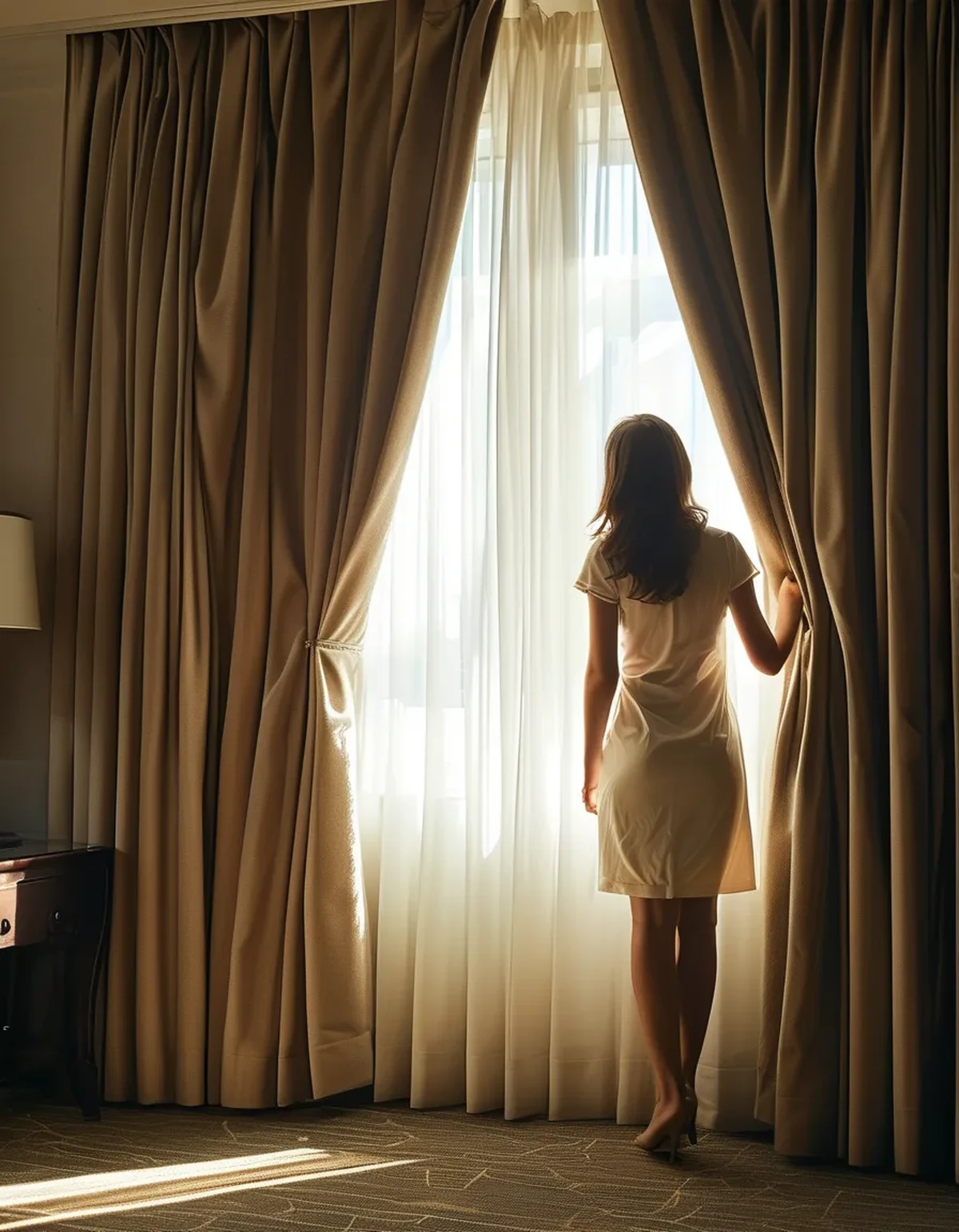
Night one, darkness is genuinely useful. You are sleeping at a biologically wrong hour and any noise or light will fragment what little sleep you get. Close them fully.
From night two, the calculus flips. You now need the clock to move, and darkness at local dawn actively holds it in place.
Total darkness also breaks your sense of elapsed time. Many people wake at four, see pitch black, and go back to sleep for three more hours, which anchors the old time zone another day.
Hotel rooms compound it with deep floor plans. Even with curtains open, a room facing an atrium or a light well may never get bright, which is why going outside beats opening the window.
Eye masks have the same trade-off. Useful for the flight and night one, counterproductive if you wear one until nine every morning.
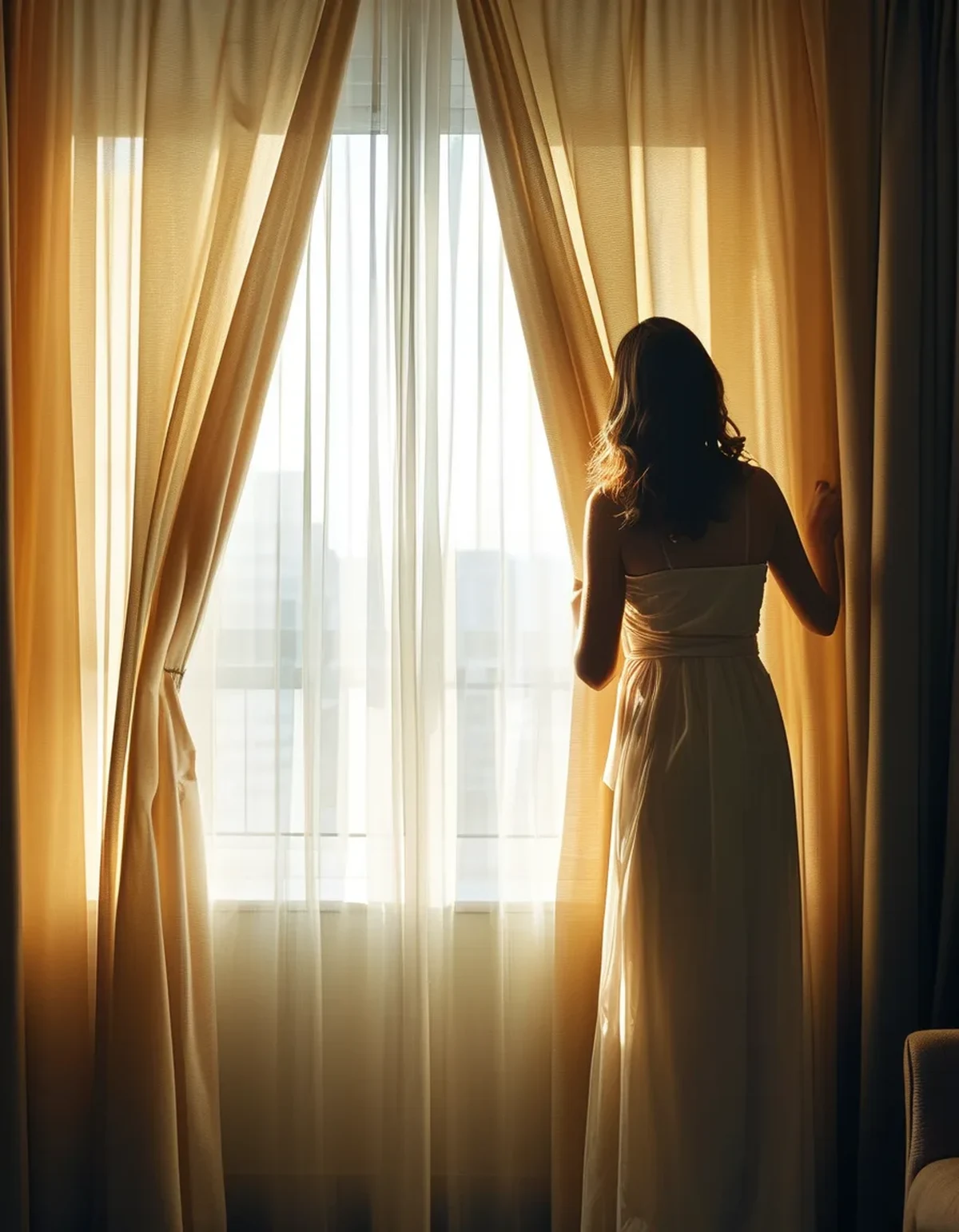
The fix is a gap, not a choice. Leave a hand-width opening at the curtain so the room brightens gradually near your target wake time, and keep the mask for the plane.
5 Mistakes That Stretch Jet Lag Out
Mistake one: sleeping in because you are tired. Tiredness is real and sleeping past local mid-morning is the single most reliable way to keep the clock where it was. Get up, get light, and take a short nap early in the afternoon if you need one.
Mistake two: taking a long nap after four in the afternoon. A twenty-minute nap before three helps you get through the evening. A ninety-minute nap at five removes the sleep pressure you need at bedtime.
Mistake three: getting bright light at the wrong end of the day. Flying east, evening light pushes your clock further from where you want it. Flying west, it helps. The direction of travel decides which half of the day to seek light and which to dim.
Mistake four: eating on the old clock. Meal timing is a secondary cue but a real one. Eating a full meal at three in the morning local time tells your liver and gut it is still yesterday.
Mistake five: treating coffee as neutral. Caffeine does not shift the clock, and it masks the tiredness that would otherwise push you toward a local-time sleep. A morning coffee is fine. A four o’clock one costs you the night.
And the one nobody expects: the room’s own darkness is why so many people feel fine on a trip where they stayed with friends and terrible in a good hotel. The spare room had thin curtains.
A curtain-and-light plan for the first four days
Six steps, all of which take less than a minute to set up.
Night one: curtains fully closed, mask on. Protect the sleep. You are not shifting anything yet.
Every morning after: leave a gap of about twenty centimetres on the side of the curtain that faces the brightest aspect. You want the room to lighten before your alarm rather than after it.
Get outside within thirty minutes of waking, for at least fifteen minutes, ideally longer. Walk to breakfast rather than eating in the hotel. This is the single highest-value action of the day.
Flying east, dim the evening. Sunglasses on the way back to the hotel if it is still bright, low lights in the room, and screens dimmed. You are protecting an earlier clock.
Flying west, do the opposite. Chase late afternoon and early evening light and avoid an early bedtime, because you are trying to push the clock later.
Set your watch to local time before you board, and eat and sleep by it from that moment. Deciding once on the plane is easier than deciding six times on the ground.
One practical note about hotels: if the room is genuinely dark all day, ask for a higher floor or a different aspect at check-in. It is a free request and it is worth more than most of the amenities.
FAQ: Jet Lag and Hotel Rooms, Answered
Should I use blackout curtains when I travel?
Use them fully on the first night, when protecting sleep matters most. After that, leave a gap so the room brightens near your target local wake time. Complete darkness every morning removes the light cue that shifts your body clock, which is what actually ends jet lag.
How long does jet lag really last?
Roughly a day per time zone crossed if you do nothing, and often half that with deliberate morning light and consistent local meal times. Eastward travel is usually harder than westward because delaying your clock is easier than advancing it.
Is opening the curtains as good as going outside?
No, and the gap is bigger than it feels. Indoor light near a window is often a few hundred lux; outdoors even under cloud is ten thousand or more. Fifteen minutes on the street does more than two hours by the window.
TL;DR:
- Jet lag is a clock problem. Light sets the clock; sleep only repays tiredness.
- Blackout curtains help on night one and hold your clock in place every morning after.
- Leave a hand-width gap in the curtain and get outdoors within thirty minutes of waking.
- Flying east, seek morning light and dim the evening. Flying west, do the reverse.
The room being dark is not the problem. The room being dark at eight in the morning on day three is.
Keep Reading
This article is for general informational and styling purposes only. Fit, sizing, and product availability may vary.