Why the First Night of a Trip Is Always Your Worst Sleep, Even When You Are Exhausted
Quick Answer: Sleep researchers call it the first-night effect. In an unfamiliar sleeping environment, one brain hemisphere stays measurably more alert than the other, monitoring for unexpected sounds, which produces lighter sleep, more awakenings, and less deep sleep on night one. It typically resolves by the second night. You cannot switch it off, and you can shrink it by making the room feel less novel and by controlling the two things it reacts to most, which are unfamiliar sound and unfamiliar light.
You are not a bad traveller. You are a vertebrate in a new cave.
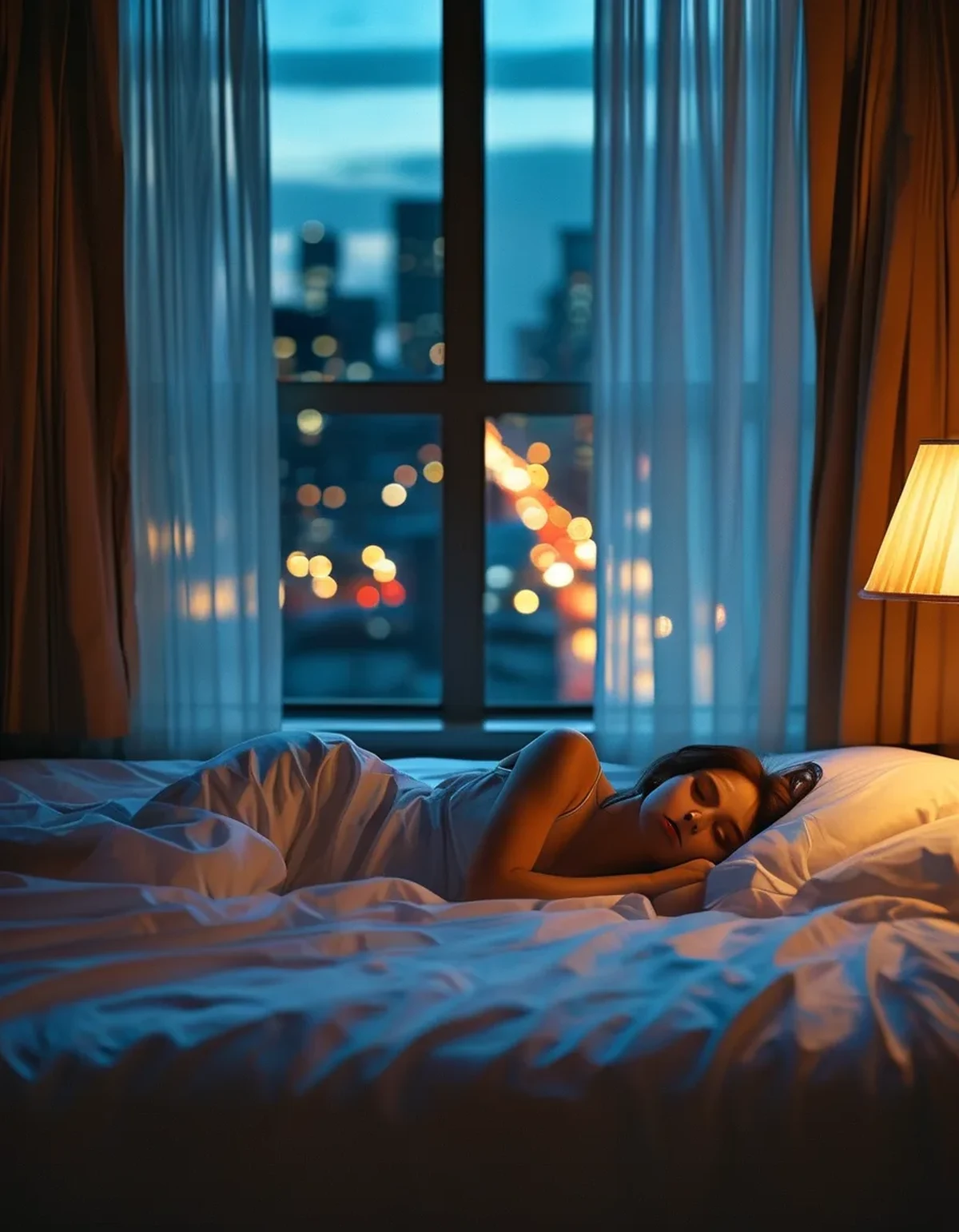
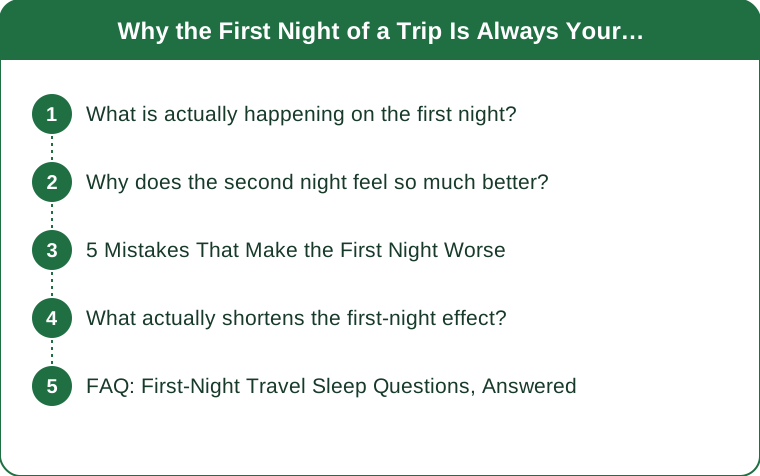
What is actually happening on the first night?
Part of your brain refuses to fully clock off.
Sleep studies have repeatedly shown that people sleep worse the first night in a lab than on subsequent nights — so consistently that researchers routinely discard night-one data as unusable. It has a name, the first-night effect, and it was a nuisance long before anyone explained it.
The explanation involves hemispheric asymmetry. During deep sleep on the first night in a new place, one hemisphere shows shallower sleep than the other, and that more-awake side responds more strongly to unexpected sounds. Several bird and marine mammal species do a more extreme version of the same thing, keeping one hemisphere awake continuously.
What that produces, practically:
More awakenings, especially in the first half of the night, often to sounds you would sleep straight through at home.
Less deep sleep, which is the stage that drives the feeling of having actually rested.
A longer time to fall asleep, because the same vigilance operates before sleep onset.
A subjective sense of having been half-awake all night, which is often more extreme than the measured reality — but not imaginary either.
It is not primarily jet lag. Jet lag is a circadian misalignment that follows time zone crossing and takes days to resolve. The first-night effect happens even one town over, with no time change at all, which is why a hotel forty minutes from your house still costs you a night.
And it is not primarily the bed. A different mattress contributes, and the effect appears even in comfortable, familiar-feeling beds. Novelty is the trigger, not discomfort.
Why does the second night feel so much better?
Because the environment stops being unknown, and the deficit from night one is pushing back.
The vigilance response fades once the room has been surveyed by a full sleep cycle’s worth of experience. In studies, the asymmetry largely disappears by the second night in the same location.
Sleep pressure also builds. A poor night raises homeostatic drive, which makes the following night deeper and harder to disturb. The second night is often better than an average night at home, which is why a three-night trip feels lopsided.
This is worth planning around:
Do not schedule anything demanding for the morning after your first night. A presentation, a race, a long drive, or a hard workout on day one after arrival is competing against a genuinely reduced night. If you have any control over the itinerary, put the demanding thing on day two.
Arrive a night early when it matters. For anything with real stakes — a race, an interview, a wedding you are part of — the extra night converts your critical morning from night-one to night-two, which is the single biggest sleep intervention available to a traveller.
Expect the reverse when you get home. Your own bedroom is not novel, so the first night home is usually good, which is part of why the return leg feels easier than the outbound in one specific respect even when everything else about it is worse.
Repeat destinations get easier. A hotel you have stayed in before, or a relative’s spare room you use twice a year, produces a weaker effect than a genuinely new room, because familiarity is exactly what the response is measuring.
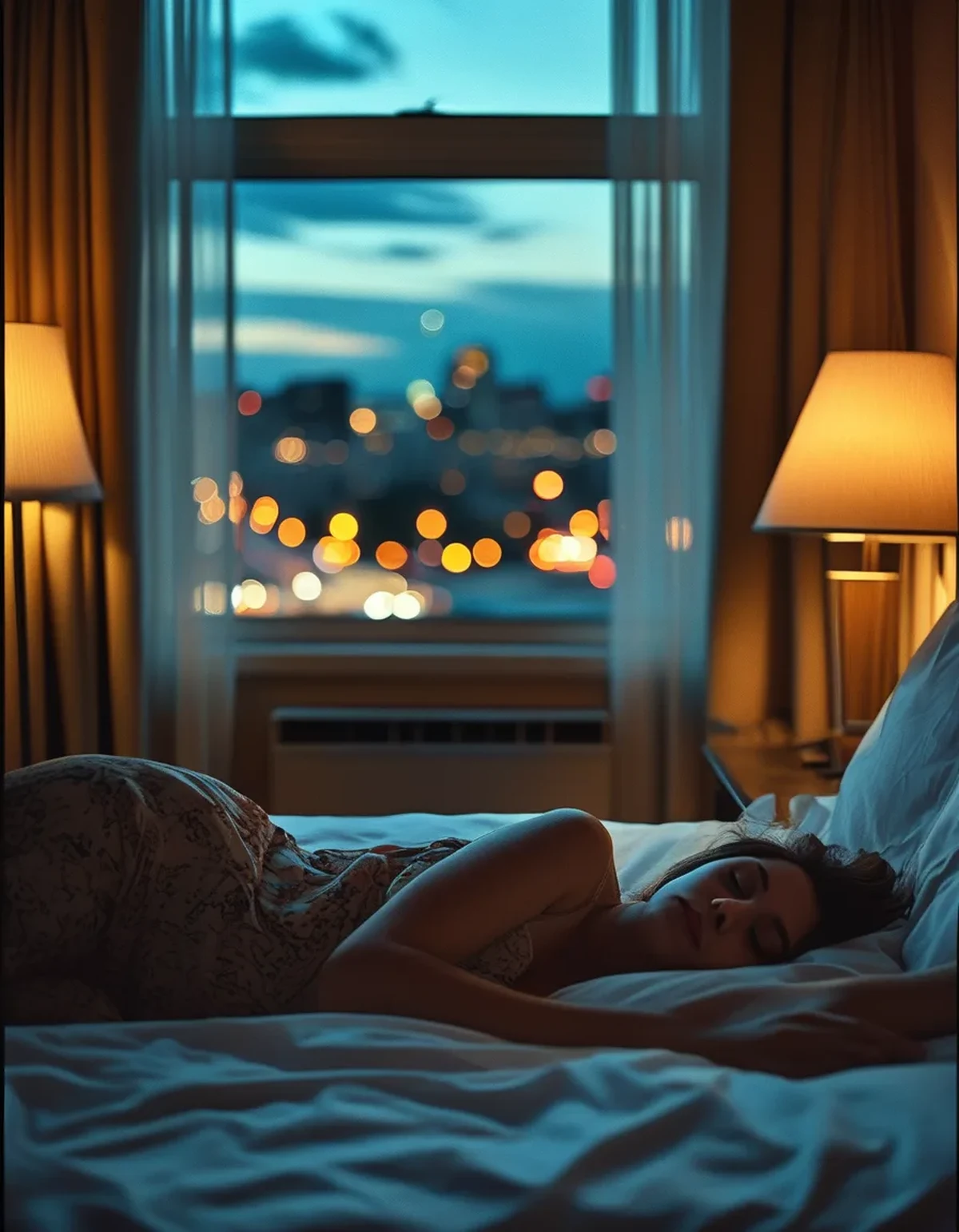
5 Mistakes That Make the First Night Worse
1. Drinking to fall asleep faster. Alcohol shortens sleep onset and then fragments the second half of the night badly, suppressing exactly the deep sleep the first-night effect is already cutting. You are paying twice for the same problem.
2. Leaving the sound environment to chance. A hotel corridor, an unfamiliar HVAC cycle, and street noise are precisely what the vigilant hemisphere is listening for. Steady masking noise — a fan, an app, the bathroom extractor — gives it nothing new to flag.
3. Working in bed on arrival night. Using the bed for email in an already-unfamiliar room removes the one association that helps: bed means sleep. Work at the desk, even a bad one.
4. Ignoring the light. Hotel rooms are full of small unfamiliar light sources — smoke detectors, chargers, a gap in blackout curtains that lands directly on the pillow. Each one is novel input. A clip or a clothes hanger closing the curtain gap costs nothing.
5. Landing and immediately napping. A long arrival nap on day one reduces the sleep pressure that would otherwise help you push through the first-night effect. If you must nap, keep it short and early in the afternoon.
What actually shortens the first-night effect?
Make the room less novel, and give the vigilance system less to work with.
Bring one or two familiar sleep cues. A pillowcase from home, your own eye mask, the same podcast or playlist you use at home. The point is not comfort, it is signalling that this is a known sleep context. Whatever your at-home routine is, run it unchanged.
Control sound before you control anything else. Sound is the input the effect is most sensitive to. Steady, featureless noise beats silence, because true silence makes every isolated sound stand out. A fan, an air conditioner on continuous, or a white noise app all work. Earplugs work too, if you sleep well in them.
Close the light gaps properly. Curtains overlapped and clipped, electronics turned to face the wall or covered, and an eye mask as backup.
Do a deliberate walkthrough of the room before bed. It sounds odd and it appears to help: check the door lock, look at the layout, identify what makes noise. Consciously satisfying the threat check reduces what your sleeping brain feels it has to monitor.
Keep the room cool. Cool rooms support deep sleep, and hotel rooms often run warm. Adjust it when you arrive, not when you get into bed.
Hold your normal schedule where the time zone allows. Going to bed dramatically earlier than usual on arrival night stacks a circadian problem on top of a novelty problem.
Skip the fix-it pill on night one if you can. Sleep medication has a place under medical guidance, and reaching for it for a single predictable, self-resolving night is usually not it.
This is general information, not medical advice. Persistent insomnia, sleep that does not recover after travel, or heavy reliance on anything to fall asleep is worth discussing with a doctor.
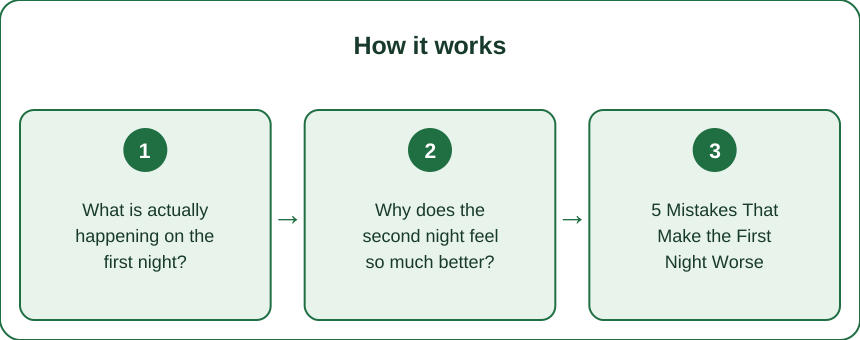
FAQ: First-Night Travel Sleep Questions, Answered
Is the first-night effect the same as jet lag?
No. Jet lag is circadian misalignment from crossing time zones and takes several days to resolve. The first-night effect happens in any unfamiliar room, including one in your own city, and usually clears by the second night.
Does it happen in a nice hotel too?
Yes. The trigger is novelty, not discomfort. A luxurious unfamiliar room and a basic unfamiliar room both register as new, which is why upgrading rarely fixes it.
How long until a new place stops feeling new?
For most people the effect largely disappears by night two and is gone by night three. Rooms you return to repeatedly produce a much weaker version from the start.
What is the single most useful thing to bring?
Steady masking sound, in whatever form you will actually use. Sound is what the alert hemisphere is monitoring, and giving it a constant, featureless background removes most of what it reacts to.
TL;DR:
- One brain hemisphere stays partly vigilant in an unfamiliar room, producing lighter, more fragmented sleep on night one.
- It is triggered by novelty rather than discomfort, and it usually resolves by the second night.
- Arrive a night early before anything that matters, and never schedule the demanding thing for morning one.
- Masking sound, blocked light, familiar sleep cues, and a cool room shrink it more than any upgrade will.
Pack the eye mask and the fan app before you pack the running shoes. One of them changes the whole trip.
Keep Reading
This article is for general informational and styling purposes only. Fit, sizing, and product availability may vary.