Layover Stretches: Reset Your Body Between Flights
Quick Answer: A layover is a recovery window. Walk two brisk terminal laps first so the tissue is warm, then run a short standing series — hip flexor stretch, chest opener against a pillar, slow side bends, 30 seconds each side. Finish with calf raises and ankle circles while your zone is called. Ten minutes total, and you board the second flight feeling human.
A layover is secretly a gift. Somewhere between gates is a window to reset a compressed spine, cranky hips, and puffy ankles before you sit down for another four hours.
You don’t need a mat. You need a gate corner and a mild disregard for onlookers — who, statistically, are looking at their phones.
Here are the stretches worth their slightly public awkwardness.
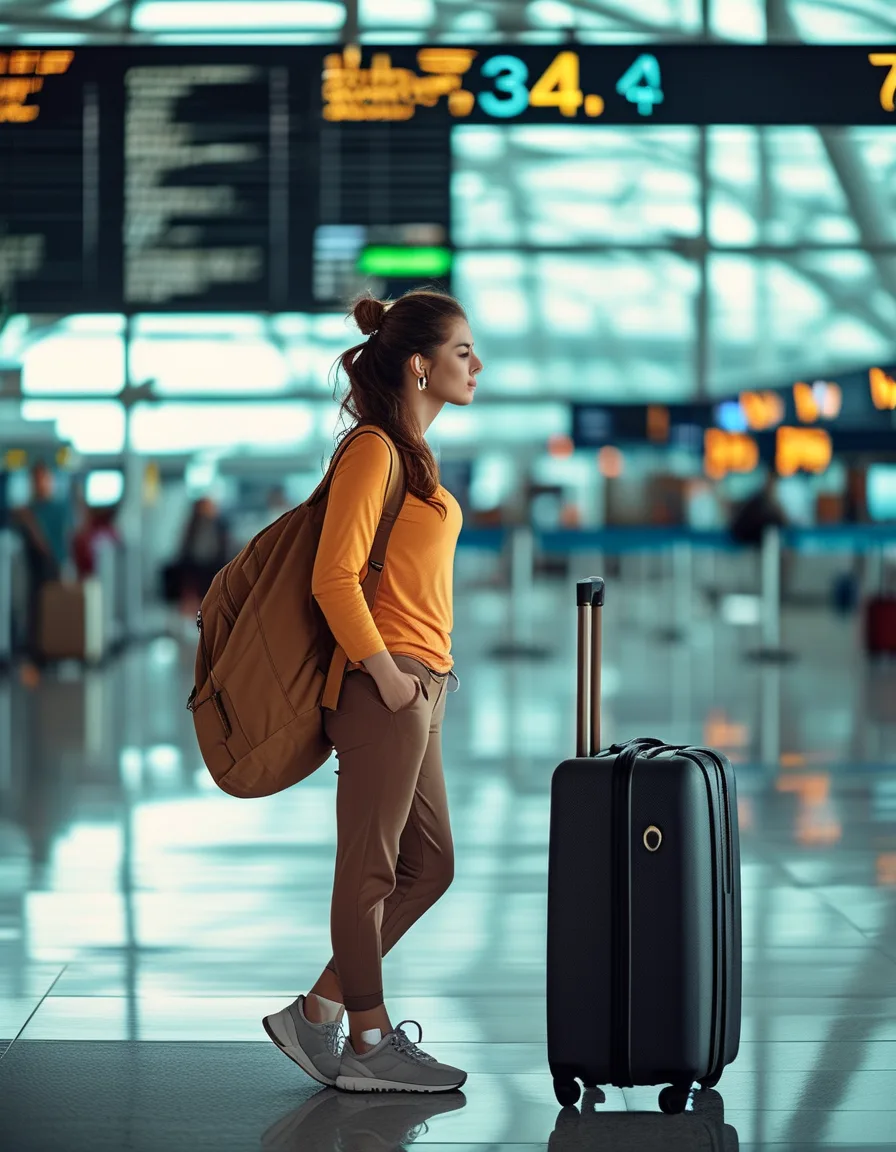
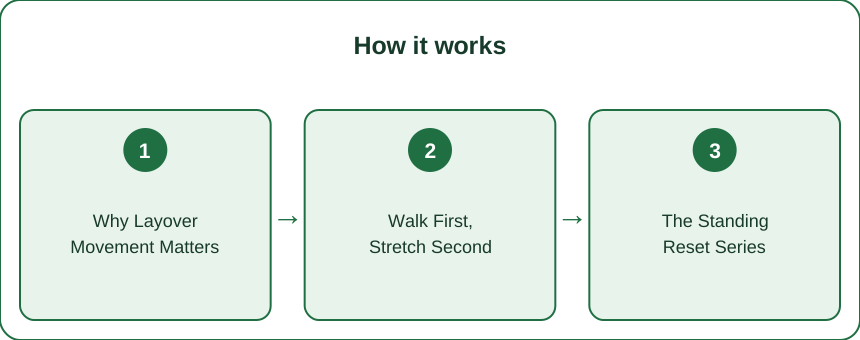
Why Does Movement Between Flights Matter So Much?
Because flying does three specific things and then asks you to do them again.
It shortens the hip flexors — hours in a seated position with the hips at 90 degrees. It compresses the spine, particularly the lower back against a fixed seat angle. And it pools fluid in the lower legs, which is why your shoes feel tighter at hour three than at boarding.
Ten minutes of terminal movement improves circulation and meaningfully changes how you feel on landing. More usefully: your second flight starts better than the first one ended, instead of stacking on top of the same stiffness.
Should You Walk First or Stretch First?
Walk first. Always.
Two brisk laps of the terminal before you stretch anything. Warm tissue lengthens safely; cold tissue resists and you push harder to compensate, which is how people tweak something in an airport.
Gate-to-gate walking also racks up steps nobody counted on. Skip the moving walkway — that’s the workout, and you’re not in a hurry if you have a layover.
Then find a quiet gate corner, ideally by a pillar and away from the boarding queue.
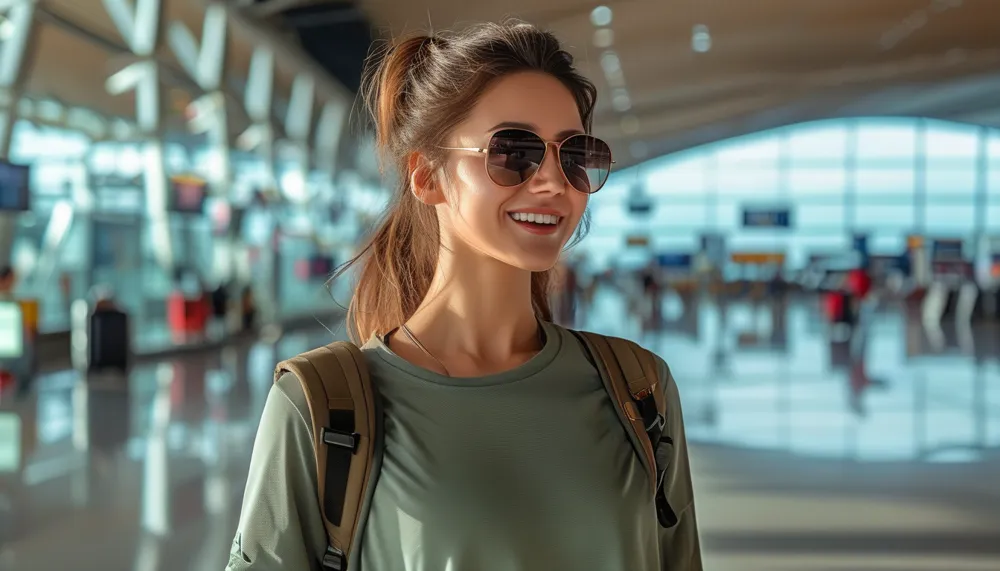
What’s the Standing Series?
Three moves, 30 seconds each side, about three minutes total.
1. Standing hip-flexor stretch. One leg back, tuck the pelvis under, press the hips gently forward. You should feel it in the front of the back-leg hip. This is the direct antidote to four hours of sitting.
2. Supported chest opener. Forearm on a pillar or wall at shoulder height, rotate your body away. Opens the chest and front shoulder, which is where all the hunching lives.
3. Slow standing side bends. Reach one arm overhead, lean gently to the opposite side. Slow, no bouncing. This decompresses the side of the ribcage and the lower back.
Thirty seconds a side undoes a surprising amount of seat-shape. Nobody notices; frankly, everybody should copy.
What If the Terminal Is Packed?
There’s a discreet version that works entirely from a waiting-area chair.
- Ankle circles — 10 each direction, each foot. The single best thing for pooled fluid.
- Seated spinal twist — hold the armrest, rotate gently toward it, 20 seconds each side.
- Figure-four stretch — ankle across the opposite knee, lean forward slightly. Hits the glutes and outer hip.
- Seated hamstring reach — one leg extended, heel down, hinge forward from the hips.
- Shoulder rolls — 10 backward, slow.
Discreet counts. A seated ankle circle does the same circulatory job as a standing one; nobody has to know you’re exercising.
What Nobody Tells You
Hydration does more than stretching. Cabin air runs at very low humidity, and dehydration is a large part of why you feel like beef jerky on landing. Fill a bottle at the fountain past security and drink it before you board.
Compression socks are the real cheat code. For flights over four hours, they beat every stretch in this article for preventing ankle swelling. Put them on before the first flight, not after.
Calf raises are the highest-value 60 seconds. The calf muscle is the pump that pushes blood back up your legs. Twenty slow raises against a wall while your zone is called does more than it has any right to.
Neck semicircles, not full rolls. Chin to chest, roll to one shoulder and back — don’t take the head backward through the full circle.
Do it again at the far end. A five-minute version at baggage claim is when the first flight’s stiffness would otherwise set for the evening.
FAQ
How long should the whole routine take?
Ten minutes: two terminal laps (five minutes), the standing series (three minutes), and calf raises plus ankle circles at the gate (two minutes). Even half of that beats sitting.
Will people stare at me stretching in an airport?
Almost never. Airports are full of exhausted people looking at screens, and gate corners are surprisingly private. If you’re self-conscious, use the seated options — they’re genuinely invisible.
Is it better to stretch before or after a flight?
Both, and the layover is the highest-value moment because it interrupts the compounding. If you can only do one, do the post-landing version — that’s when stiffness sets in for the rest of the day.
What helps most with swollen ankles?
Compression socks worn from the start, ankle circles roughly every hour in the air, standing up when it’s safe to, and staying hydrated. Stretching at the gate helps but works best combined with the other three.
TL;DR:
- Layovers are recovery windows — flying shortens hips, compresses the spine, pools fluid in the legs
- Walk two brisk terminal laps first; warm tissue stretches safely
- Standing series: hip flexor, chest opener on a pillar, slow side bends — 30 seconds each side
- Packed terminal? Ankle circles, seated twists, figure-four, hamstring reach
- Calf raises are the best 60 seconds available — the calf is the circulatory pump
- Hydrate at the fountain; cabin air is extremely dry
- Compression socks beat any stretch for flights over four hours
- Repeat a five-minute version after landing
Walk the laps, open the hips and chest, circle the ankles. Ten quiet minutes between gates and you arrive as a person rather than a pretzel.
Persistent swelling in one leg, calf pain, or shortness of breath after a long flight is worth prompt medical attention rather than more stretching.
Keep Reading
This article is for general informational and styling purposes only. Fit, sizing, and product availability may vary.